
Cold email still delivers one of the highest ROIs in B2B sales but only when it starts with verified, accurate lead data. This guide covers everything from building a quality B2B lead list to writing cold emails that actually get replies.
What Are Verified B2B Leads?
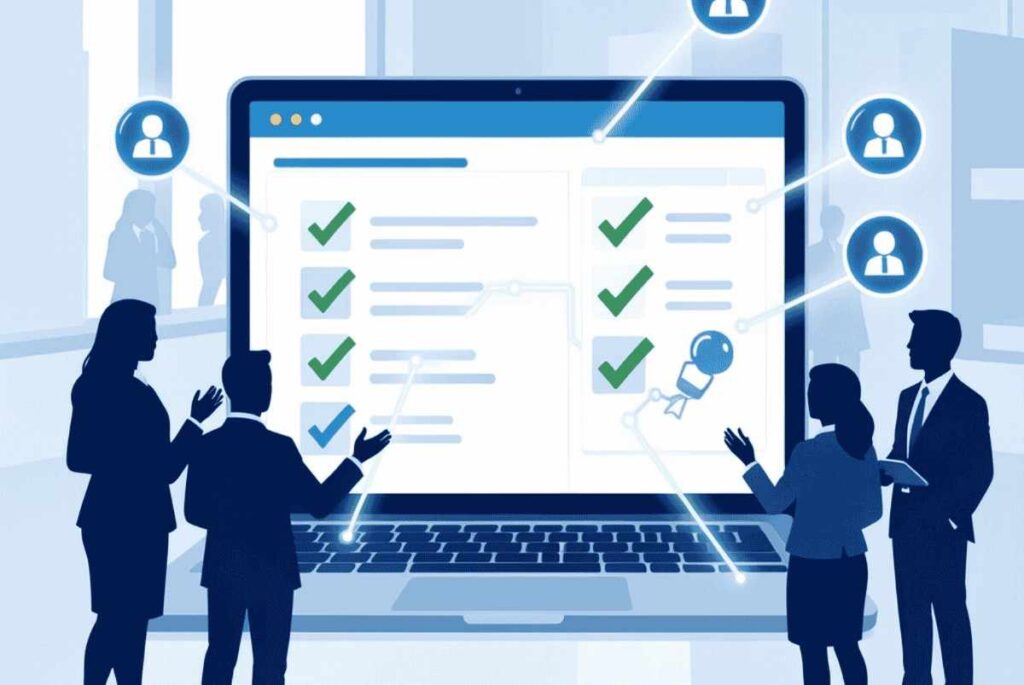
A verified B2B lead is a contact record typically a decision-maker at a target company whose email address, job title, and company details have been confirmed as accurate and deliverable. Verification removes bounced emails, outdated job titles, and duplicate records before your outreach even begins.
Unverified lead lists cause serious damage: high bounce rates trigger spam filters, sender reputation drops, and your entire domain can get blacklisted. Verified leads protect your deliverability and ensure every email sent has a real chance of landing in an inbox.
How Cold Email Lead Generation Works
Cold email lead generation is the process of identifying potential business customers, sourcing their verified contact details, and reaching out with targeted messages without any prior relationship. Done right, it is one of the most scalable and cost-effective top-of-funnel strategies in B2B sales.
The process follows four stages:
Step 1 Define your Ideal Customer Profile (ICP) Identify the industry, company size, geography, and job titles of your best-fit buyers. The sharper your ICP, the more relevant your outreach.
Step 2 Source and verify lead data Pull contact records from databases or manual research, then run every email through a verification tool to confirm deliverability before sending.
Step 3 Write and sequence your emails Craft a short, personalized opening email followed by 2–4 follow-up touches. Each message should add value or context not just repeat “just checking in.”
Step 4 Track, reply, and optimize Monitor open rates, reply rates, and booked meetings. A/B test subject lines and CTAs. Continuously refine your ICP and messaging based on what works.
What Makes a B2B Lead List High-Quality?
Not all lead lists are equal. The difference between a list that generates meetings and one that wastes your time comes down to a few key attributes:
- Email addresses verified for deliverability (not just format-checked)
- Decision-maker titles matched to your buying committee
- Company firmographics: industry, headcount, revenue, tech stack
- Recently updated no older than 90 days for fast-moving sectors
- Direct dials or LinkedIn URLs for multi-channel follow-up
- GDPR and CAN-SPAM compliant sourcing
Avoid these common data quality pitfalls:
- Generic info@ or contact@ addresses these never reply
- Lists scraped without verification bounce rates exceed 30%
- Outdated job titles people change roles every 2–3 years on average
- Purchased mass lists with no ICP filtering
Writing Cold Emails That Get Replies
The best cold email is short, specific, and easy to say yes to. Here is a proven structure:
Subject line: Keep it under 7 words. Reference something specific to them their company name, a recent news event, or their role. Avoid clickbait; recipients who feel tricked will mark you as spam.
Opening line: Skip “I hope this finds you well.” Open with a relevant observation about their business, a mutual connection, or a result you achieved for a similar company.
Value proposition: One sentence explaining what you do and who you help. Tie it to a specific pain point your prospect likely has not a list of your features.
Call to action: Make it frictionless. “Would a 15-minute call next week make sense?” is easier to say yes to than “Let me know your availability for a demo.”
Pro tip: Sequences with 4–6 touches outperform single sends by 3×. Most replies come on the 3rd or 4th email persistence, done respectfully, pays off.
Verified Lead Generation vs. Buying Lead Lists
Many businesses face a choice: build lead lists in-house, use a data provider, or outsource the entire process.
Building in-house gives you full control and ICP precision, but is time-intensive. Data providers like Apollo, ZoomInfo, or Lusha offer scale but require verification hygiene. Outsourcing to a specialized lead generation service delivers speed and expertise ideal when your sales team should be closing, not prospecting.
Regardless of the source, verification is non-negotiable. Run every list through a real-time email verification tool (NeverBounce, ZeroBounce, or Millionverifier) before any send.
Frequently Asked Questions
What is a verified B2B lead? A verified B2B lead is a business contact whose email address has been confirmed as valid and deliverable, with accurate job title, company, and professional details. Verification ensures your outreach reaches a real inbox.
How many emails should a cold outreach sequence include? Most successful sequences include 4–6 emails spread over 2–3 weeks. The first email introduces your offer; follow-ups add context, social proof, or a different angle. Each touch should feel like a natural conversation, not a broadcast.
Is cold email legal for B2B outreach? Yes, B2B cold email is legal in most jurisdictions under CAN-SPAM (US) and GDPR’s legitimate interest provision (EU), provided you include your company name, a physical address, and an easy opt-out mechanism. Always consult your legal team for region-specific guidance.
What is a good reply rate for cold email? Industry benchmarks put average cold email reply rates at 1–5%. A well-targeted campaign with verified data and strong personalization can reach 8–15%. Anything above 10% is considered excellent performance.
How often should B2B lead lists be updated? Lead data degrades at roughly 20–30% per year as people change jobs, companies restructure, and emails go inactive. For active outreach campaigns, refresh and re-verify lists every 60–90 days.
