

Introduction
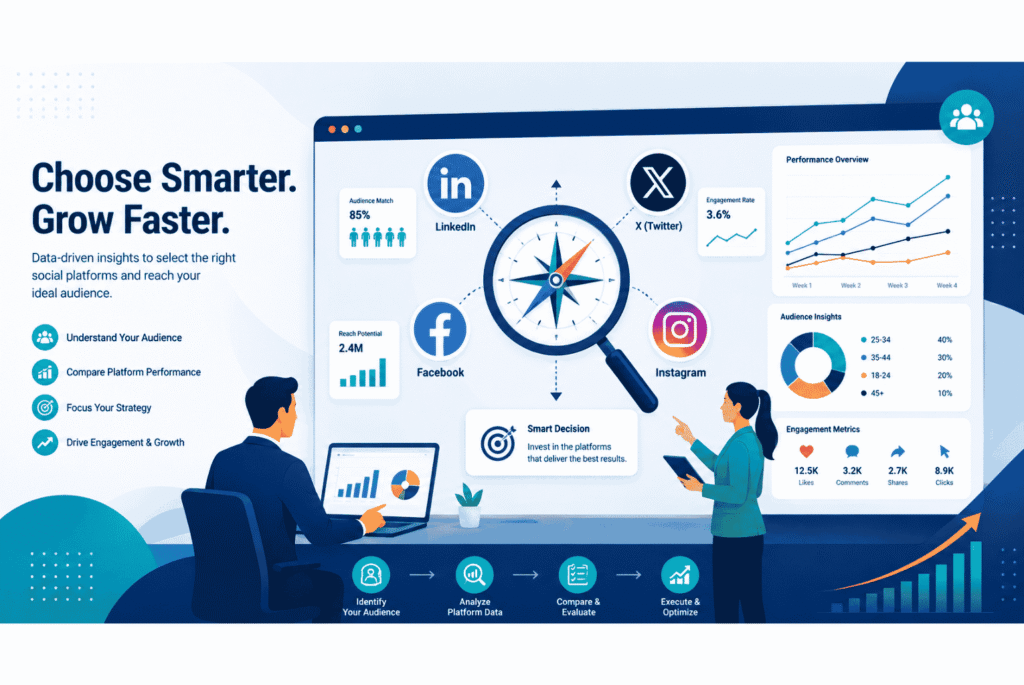
Choosing the right social media platforms can make or break your B2B marketing strategy. With limited time, budget, and team bandwidth, spreading yourself across every platform is a recipe for mediocre results. Instead, successful B2B marketers focus on the platforms where their target audience is most active and where their content format aligns with platform strengths.
This guide walks you through a practical framework for selecting the best social media platforms for your B2B business, breaks down the major platforms (Facebook, LinkedIn, Twitter/X, Instagram, and YouTube), and shows you how each one can support your lead generation goals.
Want to Write Effective Content for Social Media and Generate More Leads?
Before picking platforms, it helps to know what you’re optimizing for. Effective B2B social content typically does three things: educates your audience, builds trust in your brand, and gently moves prospects toward a conversion action (a demo request, content download, or website visit). If you’re producing content without a clear lead generation angle, even the “right” platform won’t deliver results.
1. Know Your Audience
Start by mapping out who your buyers actually are. Consider:
Job titles and seniority levels of your decision-makers and influencers, the industries and company sizes you typically sell into, where your audience spends time online for professional development versus casual browsing, and the type of content they respond to (long-form articles, quick tips, videos, case studies).
For most B2B companies, your audience research will point heavily toward LinkedIn, but don’t dismiss other platforms outright Twitter/X is valuable for thought leadership and industry conversations, while YouTube works well for product demos and tutorials.
2. Define Your Objectives (For Being on Social Media)
Your platform choices should align with specific goals. Common B2B social media objectives include:
Brand awareness and visibility within your industry, lead generation through gated content or direct outreach, customer support and community engagement, recruiting and employer branding, and thought leadership positioning for executives.
A platform that’s excellent for brand awareness (like Instagram) might be a poor fit for direct lead generation, while a platform like LinkedIn can support nearly all of these objectives simultaneously.
3. Assess Your Resources
Be honest about what your team can sustain. Ask yourself:
Do you have the bandwidth to create video content regularly, or are written posts and graphics more realistic? Can you maintain an active posting cadence on more than two platforms? Do you have budget for paid promotion, and if so, on which platforms does your audience respond best to ads?
It’s better to do two platforms exceptionally well than five platforms poorly. Quality and consistency beat quantity every time.
Kick Start Social Media Marketing for Your Business
Once you’ve assessed your audience, objectives, and resources, you’re ready to choose platforms strategically. Below is an overview of the most popular social media platforms for business.
Here Is an Overview of the Most Popular Social Media Platforms for Business
Overview
Facebook remains one of the largest social networks globally, and while it’s often associated with B2C marketing, it still has a role to play for B2B companies particularly for community building, customer support, and targeted advertising.
Demographics
Facebook’s user base spans a wide age range, with strong representation among adults aged 25-54. Many business decision-makers use Facebook personally, even if they primarily network professionally elsewhere.
How Facebook Works for Your Business
For B2B brands, Facebook works best as a supplementary channel useful for retargeting campaigns, building a company community page, and running highly targeted ads based on job titles, industries, and interests.
What Works for Facebook
Customer testimonials and case studies, behind-the-scenes company culture content, event promotion (webinars, trade shows), and targeted Facebook Ads for lead generation campaigns all tend to perform well.
Overview
LinkedIn is the undisputed leader for B2B social media marketing. It’s purpose-built for professional networking, making it the natural home for B2B content, relationship-building, and lead generation.
Demographics
LinkedIn’s user base consists primarily of working professionals, including a high concentration of decision-makers, executives, and industry specialists across virtually every sector.
How LinkedIn Works for Your Business
LinkedIn supports B2B goals across the board: company pages build brand presence, employee advocacy amplifies reach, LinkedIn Ads allow precise targeting by job title and company, and LinkedIn Groups facilitate industry discussions.
What Works for LinkedIn
Thought leadership articles and posts from executives, industry insights and data-driven content, case studies and customer success stories, employee-generated content, and polls or discussion-starting posts consistently drive engagement.
Twitter (X)
Overview
Twitter/X is a fast-moving, conversation-driven platform that’s particularly useful for real-time engagement, industry news, and building relationships with journalists, analysts, and other B2B influencers.
Demographics
Twitter/X tends to attract a more news-savvy, professionally engaged audience, including journalists, tech professionals, and industry commentators.
How Twitter Works for Your Business
Twitter/X is ideal for sharing quick updates, engaging in industry conversations, providing customer support, and positioning your brand or executives as active participants in relevant discussions.
What Works for Twitter
Quick tips and bite-sized insights, sharing and commenting on industry news, live-tweeting from events or webinars, and direct engagement with followers through replies and threads tend to perform best.
Overview
Instagram is a visually-driven platform that, while traditionally B2C-focused, has growing relevance for B2B brands that want to humanize their company and showcase culture, products, or behind-the-scenes processes.
Demographics
Instagram skews toward a younger audience overall, but its user base includes a growing number of professionals, particularly in creative, tech, and consumer-adjacent industries.
How Instagram Works for Your Business
For B2B companies, Instagram works well for employer branding, showcasing company culture, and humanizing your brand which can indirectly support recruiting and brand affinity goals.
What Works for Instagram
Behind-the-scenes photos and videos, employee spotlights, infographics summarizing key data or tips, and short-form video content (Reels) tend to resonate.
Grow Your Business on Instagram
To get the most from Instagram, focus on consistency and visual quality. Use Stories for quick, casual updates and Reels for short educational or culture-focused content. Even B2B brands can benefit from showing the people behind the product.
YouTube
Overview
YouTube is the second-largest search engine in the world, making it a powerful platform for B2B companies producing educational, instructional, or demo content.
Demographics
YouTube has one of the broadest user bases of any platform, with strong representation across all age groups and professional levels, including B2B decision-makers researching solutions.
How YouTube Works for Your Business
YouTube supports B2B goals through product demos, customer testimonial videos, webinar recordings, and educational “how-to” content that helps prospects in the research stage of their buying journey.
What Works for YouTube
Product walkthroughs and demos, customer success story videos, educational tutorials and explainer content, and webinar or conference recordings tend to drive strong engagement and SEO value.
How to Select the Right Platforms for Your B2B Social Media Marketing Strategy
Selecting the right platforms isn’t a one-time decision it’s an ongoing process of testing, measuring, and refining. Start by auditing where your current customers and prospects are already engaging online. Look at your website analytics referral data, ask your sales team which platforms come up in conversations with leads, and run small test campaigns on two or three platforms before committing significant resources.
How to Build a Social Media Strategy
A strong B2B social media strategy starts with clear, measurable goals tied to business outcomes not vanity metrics like follower counts. Define what success looks like: qualified leads, website traffic, demo bookings, or brand awareness within a target account list.
From there, build a content calendar that balances different content types: educational posts, thought leadership, customer stories, and product updates. Assign ownership for content creation, approval, and posting so the process doesn’t stall. Finally, set up tracking so you can tie social activity back to pipeline UTM parameters, CRM integration, and regular reporting reviews help you understand what’s actually driving results, not just what’s getting likes.
How Directive Scales B2B Organic Social Programs
Scaling an organic social program for B2B sustainably comes down to systemizing repeatable content production. Rather than creating one-off posts, successful programs build content “engines” repurposing long-form content (blog posts, webinars, case studies) into multiple social formats across platforms.
Employee advocacy also plays a major role at scale: equipping team members, especially subject matter experts and leadership, with easy-to-share content multiplies organic reach without additional ad spend. Combining this with a consistent publishing cadence, performance tracking by content type, and periodic content audits to retire underperforming formats allows programs to grow without proportionally growing the team size.
To Conclude
There’s no single “best” platform for B2B social media marketing the right choice depends on your audience, objectives, and resources. For most B2B companies, LinkedIn should be a top priority given its professional user base and lead generation capabilities. Twitter/X and YouTube can complement your LinkedIn presence with real-time engagement and educational content, while Facebook and Instagram can support brand awareness and employer branding goals.
The key is to start with one or two platforms, do them well, measure results, and expand only when you have the resources to maintain quality and consistency.
FAQs
Q: How many social media platforms should a B2B company use?
A: Most B2B companies see the best results focusing on 2-3 platforms rather than spreading efforts too thin. LinkedIn is typically the priority, with one or two additional platforms based on audience and content type.
Q: Is LinkedIn really the best platform for B2B marketing?
A: For most B2B companies, yes LinkedIn’s professional user base and targeting capabilities make it the most effective platform for lead generation and thought leadership. However, the “best” platform always depends on where your specific audience spends time.
Q: Can B2B companies benefit from Instagram and TikTok-style content?
A: Yes, particularly for employer branding, recruiting, and humanizing the company. While these platforms rarely drive direct leads for B2B, they support brand awareness and culture-building goals.
Q: How often should a B2B company post on social media?
A: Consistency matters more than frequency. Posting 2-3 times per week on LinkedIn with high-quality, relevant content typically outperforms daily posting with weaker content.
Q: Should B2B companies use paid advertising on social media?
A: Paid social can be highly effective for B2B, especially on LinkedIn and Facebook, where targeting by job title, industry, and company size allows for precise audience reach. Start with a small test budget before scaling.
