
How to Generate Leads from Social Media
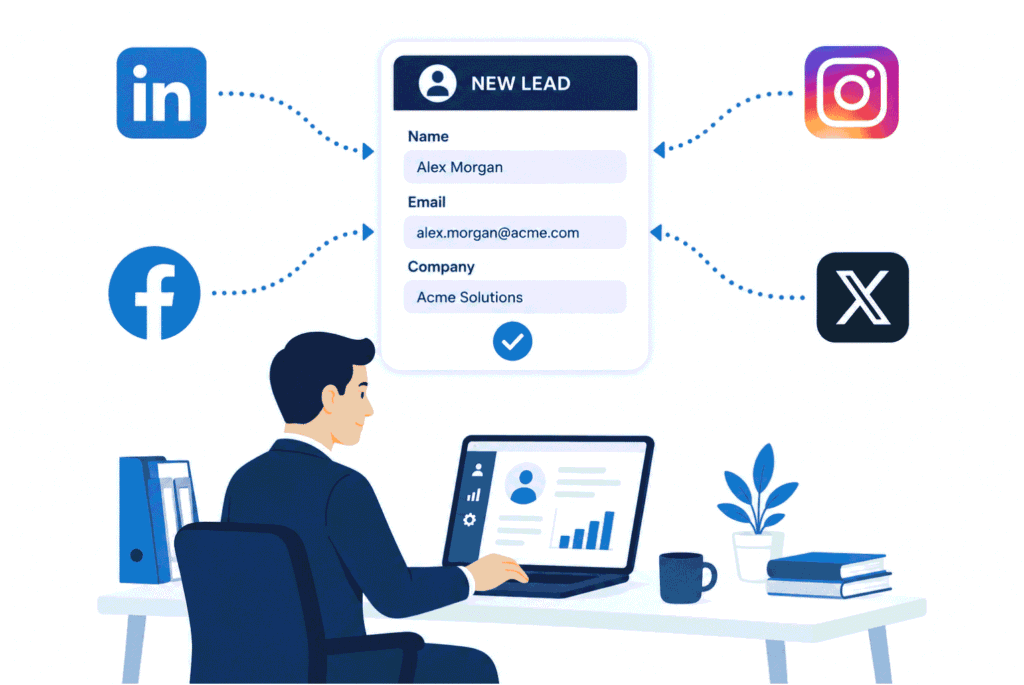
Social media isn’t just for brand awareness anymore. Today, it’s one of the most powerful lead generation engines available to B2B and B2C marketers alike. With billions of active users across platforms like LinkedIn, Facebook, Instagram, and X (formerly Twitter), the opportunity to attract, engage, and convert high-quality leads has never been greater.
But generating leads from social media isn’t as simple as posting content and hoping for the best. It requires a deliberate strategy, the right tools, and a deep understanding of your audience. In this guide, you’ll learn exactly how to turn your social media presence into a consistent lead generation machine.Social media isn’t just for brand awareness anymore. Today, it’s one of the most powerful lead generation engines available to B2B and B2C marketers alike. With billions of active users across platforms like LinkedIn, Facebook, Instagram, and X (formerly Twitter), the opportunity to attract, engage, and convert high-quality leads has never been greater.
But generating leads from social media isn’t as simple as posting content and hoping for the best. It requires a deliberate strategy, the right tools, and a deep understanding of your audience. In this guide, you’ll learn exactly how to turn your social media presence into a consistent lead generation machine.
What is Social Media Lead Generation?
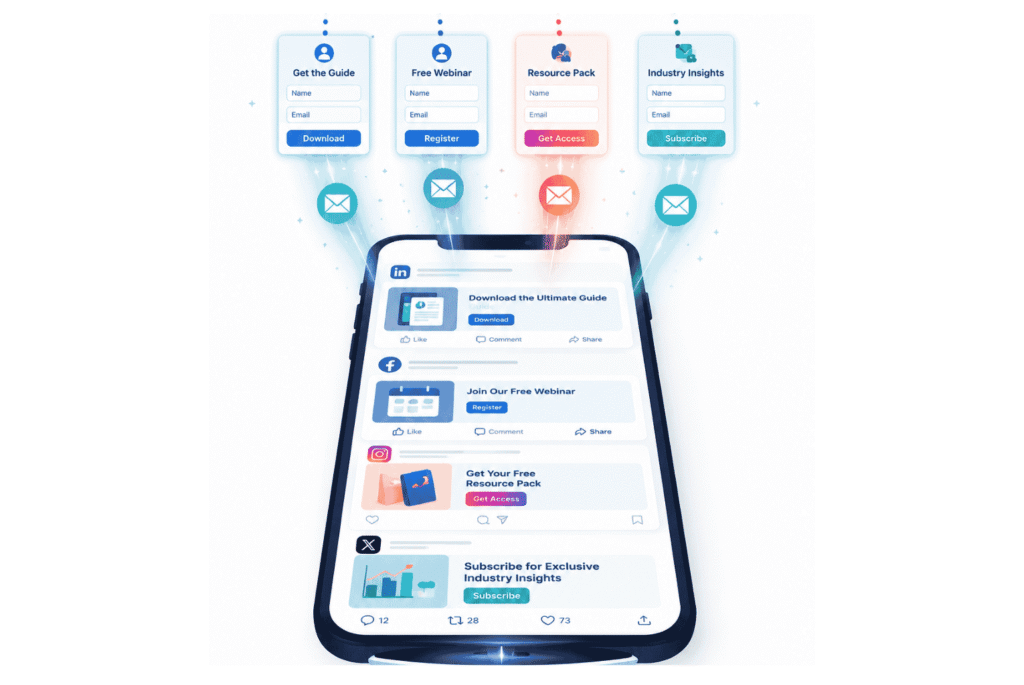
Social media lead generation is the process of using social media platforms to attract potential customers, capture their contact information, and move them into your sales pipeline. A “lead” in this context is any person who has shown interest in your product or service and provided some form of identifying information an email address, phone number, or even a direct message inquiry.
Unlike traditional advertising, social media lead generation allows you to target highly specific audiences based on demographics, interests, behaviors, job titles, industries, and more. This precision targeting means your marketing budget goes further, and the leads you capture are far more likely to convert into paying customers.
Social media lead generation can take many forms, including:
- Lead generation ads (Facebook Lead Ads, LinkedIn Lead Gen Forms)
- Organic content that drives traffic to a landing page
- Gated content promoted through social posts
- Direct messaging campaigns
- Contests, giveaways, and interactive content
- Social proof and referral programs
The goal is always the same: move a stranger from casual social media user to qualified lead in your pipeline.
6 Proven Ways to Generate Leads with Social Media
1. Use Native Lead Generation Forms
Platforms like LinkedIn and Facebook have built-in lead generation tools that allow users to submit their information without ever leaving the platform. LinkedIn Lead Gen Forms and Facebook Lead Ads pre-populate a user’s profile data, drastically reducing friction and increasing conversion rates.
These native forms are especially powerful for B2B marketers. A LinkedIn Lead Gen Form attached to a sponsored content ad can deliver conversion rates significantly higher than a standard landing page, because users don’t have to type anything their professional information is already there. Use these forms to offer gated content like whitepapers, eBooks, webinar registrations, or free consultations.
Best practices:
- Keep the form short name, email, company, and job title is usually enough
- Offer something genuinely valuable in exchange for the lead’s information
- Follow up quickly leads from native forms go cold fast
2. Create High-Value Gated Content
Content is the currency of social media lead generation. When you create content that genuinely solves a problem or answers a burning question for your target audience, people will willingly exchange their contact information to access it.
Promote gated assets eBooks, industry reports, templates, checklists, webinar recordings, or free tools directly on social media with a clear call-to-action linking to a dedicated landing page. The key word here is “high-value.” Generic, fluffy content won’t convince anyone to hand over their email address. Your gated content should be something your audience would pay for if it weren’t free.
Content types that convert well:
- Original research and industry data reports
- Step-by-step how-to guides and templates
- Free tools, calculators, or assessments
- Exclusive webinars and live Q&A sessions
- Case studies with measurable results
3. Run Targeted Paid Social Campaigns
Organic reach on most social platforms has declined significantly in recent years. Paid social advertising fills that gap, allowing you to put your lead generation offers in front of precisely the right audience at scale.
Each platform offers unique targeting capabilities. LinkedIn lets you target by job title, seniority level, company size, industry, and even specific companies making it ideal for B2B lead generation. Facebook and Instagram offer detailed interest-based and behavioral targeting, plus powerful lookalike audience features. Twitter/X and Pinterest have their own targeting options depending on your audience demographics.
Keys to a high-converting paid social campaign:
- Match your offer to your audience’s stage in the buyer journey
- Use scroll-stopping creative video consistently outperforms static images
- A/B test headlines, visuals, and CTAs continuously
- Retarget website visitors and video viewers with more specific offers
- Monitor cost per lead (CPL) closely and cut underperforming ad sets fast
4. Leverage Social Proof and User-Generated Content
Trust is the biggest barrier to lead generation on social media. Prospects who don’t know your brand need a reason to believe you can deliver on your promises. Social proof in the form of testimonials, case studies, reviews, and user-generated content (UGC) is one of the most effective ways to build that trust quickly.
Share customer success stories as posts or short video testimonials. Encourage happy customers to tag your brand and share their experiences. Highlight recognizable client logos, industry awards, or notable media mentions. When prospects see real people and real companies endorsing your product, their resistance to engaging lowers dramatically.
Effective social proof formats:
- Short video testimonials from customers (30–60 seconds)
- Before-and-after results or metrics from case studies
- Screenshots of positive reviews or ratings
- Influencer partnerships and co-created content with industry voices
- “As seen in” media badges shared on your profile
5. Engage in Social Listening and Direct Outreach
Some of the best leads are already on social media they’re just talking about their problems in public. Social listening tools allow you to monitor keywords, hashtags, competitor mentions, and industry conversations in real time. When someone tweets about struggling with a problem your product solves, or asks for recommendations in a LinkedIn group, that’s a warm lead hiding in plain sight.
Direct, personalized outreach to these prospects done respectfully and without being pushy can generate highly qualified leads at zero ad spend. LinkedIn is particularly powerful for this with its messaging and connection request features.
Social listening strategy tips:
- Monitor keywords related to your product, competitors, and industry pain points
- Join and actively participate in LinkedIn groups and Facebook communities in your niche
- Respond to questions and comments with genuine value not a sales pitch
- Build relationships first; the lead conversion follows naturally
- Use tools like Hootsuite, Sprout Social, or Brandwatch to scale your listening efforts
6. Host Webinars and Live Events on Social Platforms
Live content creates urgency, drives real-time engagement, and positions your brand as a trusted authority. Hosting webinars, LinkedIn Lives, Instagram Lives, or Facebook Live sessions gives your audience a reason to show up, engage, and provide their contact details through registration.
The registration process itself is a lead capture mechanism. Promote your live event across your social channels in the days leading up to it, require email registration, and follow up with both attendees and no-shows with relevant content and offers after the event.
Maximizing lead generation from live events:
- Choose topics that address a specific, urgent pain point for your ICP
- Co-host with industry partners or influencers to expand your reach
- Repurpose the recording as on-demand gated content after the live event
- Use polls and Q&A during the event to qualify leads in real time
- Send a follow-up email sequence to all registrants within 24 hours
Conclusion
Social media lead generation is no longer optional for businesses that want to stay competitive. It’s a high-impact, measurable channel that when executed strategically delivers a consistent flow of qualified leads directly into your pipeline.
The six strategies covered in this guide native lead forms, gated content, paid campaigns, social proof, social listening and outreach, and live events each work independently, but they’re most powerful when combined into a cohesive social media lead generation system.
Start by identifying which platforms your ideal customers use most. Then choose one or two of these strategies to implement immediately, measure your results, and build from there. The businesses that win on social media are those that show up consistently, provide genuine value, and make it easy for their audience to take the next step.
Your next great customer is already scrolling. Make sure they find you.
FAQs
What is Social Media Lead Generation?
Social media lead generation is the practice of using social media platforms to identify, attract, and capture potential customers known as leads for your business. It involves creating content, running paid ads, engaging with audiences, and using platform-specific tools to encourage users to share their contact information or take a meaningful action (like booking a demo or downloading a resource). The ultimate goal is to move social media users from casual followers into qualified prospects in your sales pipeline. Unlike traditional lead generation methods, social media lead generation allows for highly precise audience targeting, real-time engagement, and two-way conversations with potential buyers.
What are some of the tools used for Lead Generation?
There are a wide range of tools available to help businesses generate leads more efficiently from social media and beyond:
Social Media Native Tools:
- LinkedIn Lead Gen Forms capture leads directly within LinkedIn ads
- Facebook Lead Ads native lead capture forms within Facebook and Instagram campaigns
- Twitter/X Lead Generation Cards collect emails directly from promoted tweets
CRM and Marketing Automation:
- HubSpot all-in-one CRM, email marketing, and lead nurturing platform
- Salesforce enterprise-grade CRM with deep pipeline management
- Marketo advanced marketing automation for B2B lead nurturing
Social Listening and Engagement:
- Hootsuite social media management and listening across multiple platforms
- Sprout Social social listening, scheduling, and analytics
- Brandwatch enterprise social listening and audience intelligence
Landing Page and Conversion Tools:
- Unbounce build and A/B test high-converting landing pages
- Leadpages fast landing page creation with built-in lead capture
- Typeform interactive forms and surveys that convert at high rates
Data and Prospecting:
- LeadsEmails verified B2B contact data for targeted outreach and audience building
- LinkedIn Sales Navigator advanced prospecting and lead tracking on LinkedIn
- Hunter.io find and verify professional email addresses
The right tool stack depends on your business size, budget, and whether your focus is B2B or B2C lead generation.
What is Custom Audiences?
Custom Audiences is a powerful targeting feature available on platforms like Facebook, Instagram, and LinkedIn that allows advertisers to reach a specific group of people based on data they already own or have collected.
Instead of targeting cold audiences by broad interest or demographic categories, Custom Audiences lets you target users who have already interacted with your business in some way making them far more likely to convert.
Common types of Custom Audiences include:
- Customer List Audiences: Upload a list of existing customer email addresses or phone numbers, and the platform matches them to user profiles so you can run ads directly to those individuals.
- Website Visitor Audiences: Using a tracking pixel installed on your website, you can retarget people who have visited specific pages, viewed certain products, or started but didn’t complete a form.
- Engagement Audiences: Target users who have watched your videos, interacted with your posts, visited your profile, or engaged with your lead generation forms.
- App Activity Audiences: Reach people who have taken specific actions within your mobile app.
Custom Audiences are also the foundation for Lookalike Audiences a feature that analyzes your best customers and finds new users on the platform who share similar characteristics, allowing you to scale your lead generation to highly relevant cold audiences.
For B2B marketers, Custom Audiences are especially valuable when combined with a strong B2B contact database like DataCaptive, where verified prospect lists can be uploaded directly into ad platforms to run hyper-targeted lead generation campaigns.
